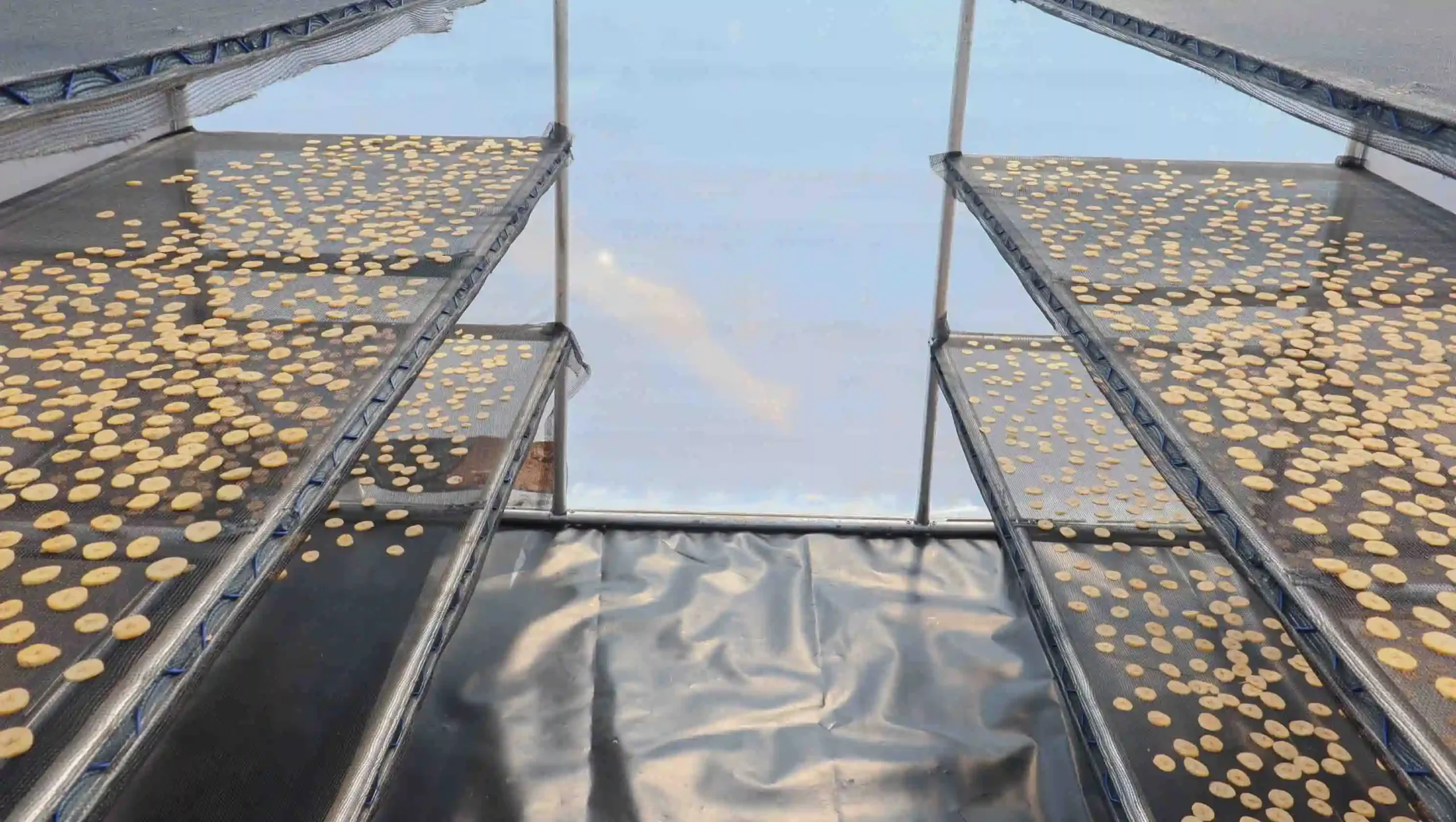
Solar dryer design and construction by Aqua Hub LTD helps improve harvest and cut down on losses. We design and install solar dryers made of wood, painted aluminium or galvanised steel materials. Our solar dryers are customisable box and greenhouse tunnel designs with common sizes of 2 x 2 x 2 m, 3 x 3 x 2 m, 8 x 15 m, 8 x 30 m and 16 x 30 m.
Call 0790719020
Quick Takeaways
- Solar dryers effectively preserve vegetables and fruits, reducing waste.
- There are various types, including direct, indirect, and hybrid systems.
- Costs depend on size, materials, and complexity, but DIY options are affordable.
- Using polycarbonate sheets enhances durability and efficiency.
- Proper design, orientation, and maintenance are key to optimal drying.
- Solar drying technology is a valuable investment for small-scale farmers.
- Future innovations promise even more accessible and efficient drying solutions.
Solar Dryer Construction in Kenya
Solar dryers create a controlled environment which accelerates drying and meets hygiene standards. We have done more than 500 solar dryer projects for large-scale farmers and communities in Kenya. Our dryers are built using high-quality UV-resistant polythene sheets and non-corrosive food-grade steel metals.
Post-Harvest Handling Using Solar Dryers
Research shows that the rate of post-harvest losses in Kenya during handling and storage is at 37%. Crops such as bananas, leafy greens, cabbage and tomatoes are produced in large volumes, but nearly half is lost due to poor handling.
Traditional sun drying is not effective and results in contamination, slow drying and spoilage. With solar dryers, crops are efficiently dried with nutritional value preserved for future consumption.
What is a solar dryer?
A solar dryer is a device that uses solar energy to remove moisture from agricultural produce such as vegetables, fruits, herbs, and spices.
Importance of Solar Dryers for Kenyan Farmers
Kenyan farmers often harvest high-value crops that can spoil quickly if not dried promptly. Solar dryers enable farmers to:
- Reduce post-harvest losses significantly
- Improve crop quality and market value
- Extend shelf life without relying on electricity or fuel
- Enhances value addition, which attracts export market demand.
- Meets safety standards for local and export consumption.
- Lowers cost of drying harvest and, in the end, cuts on production costs.
- Solar dryers are less labour-intensive.
Benefits of Solar Dryers over Traditional Drying Methods
Compared to traditional sun-drying, solar dryers offer several advantages:
- Faster drying
- Reduced contamination and pest infestation
- Better preservation of nutrients and flavor
- Controlled environment for consistent quality
- Less exposure to dust, insects, and rain
Types of Solar Dryers
Direct Solar Dryers
Direct solar dryers expose the produce directly to sunlight under transparent covers like glass or polycarbonate sheets. They are simple and inexpensive but may lead to contamination and uneven drying, especially in humid conditions. Suitable for small quantities and sunny days.
Indirect Solar Dryers
Indirect solar dryers use a separate chamber where solar energy heats air, which is then circulated over the produce inside a drying chamber. This setup minimizes contamination and allows for better temperature control, making it suitable for drying delicate items like herbs and fruits.
Factors Influencing Cost
The cost of building or purchasing a solar dryer depends on:
- Size and capacity (small, medium, large)
- Materials used (polycarbonate sheets, wood, metal)
- Design complexity (simple box vs. integrated systems)
- Additional features like fans or insulation
- Labor and fabrication costs
Design Principles of a Solar Dryer
- Solar collector: Absorbs sunlight, typically covered with transparent material.
- Drying chamber: Holds the produce, often insulated.
- Ventilation system: Circulates air for efficient drying.
- Support structure: Ensures stability and optimal positioning.
- Covering material: glass or polycarbonate sheets to maximise sunlight transmission.
Optimal Orientation and Positioning
Position the dryer facing true south (in the northern hemisphere) or true north (in the southern hemisphere), with an inclination angle equal to the latitude (~1° per km). This maximises solar gain throughout the year.
Role of Insulation and Ventilation
Proper insulation reduces heat loss, while good ventilation ensures moisture-laden air is expelled, speeding up drying. Incorporating adjustable vents allows for better control over airflow.
Materials Used in Solar Dryer Construction
- Polycarbonate sheets: durable, UV resistant, high light transmission.
- Wood: Easily available, used for frames.
- Galvanised steel or aluminium: for structural support.
- Inexpensive materials: Bamboo, recycled wood, or scrap metal.
Use of Polycarbonate Sheets
Polycarbonate sheets are preferred for their durability, transparency, and UV resistance. They allow maximum sunlight penetration, essential for efficient drying, and are available at affordable prices in Kenya.
Durable and Local Materials
Using locally sourced materials reduces costs and supports local economies. For example, bamboo and recycled materials can be used for framing and support structures.
How to Build a Solar Dryer: Step-by-Step Construction Guide
- Design your dryer based on capacity needs (e.g., drying trays for vegetables).
- Construct the frame using wood or recycled materials, ensuring stability.
- Install polycarbonate sheets as the transparent cover for the solar collector.
- Build the drying chamber with proper insulation and ventilation.
- Set up adjustable vents for airflow regulation.
- Position the dryer facing the appropriate direction and at the correct tilt.
Test the dryer on sunny days, load produce, and monitor drying times.
Fabrication of a Solar Dryer
Planning and Design Customization
Assess your farm size, crop type, and drying volume to customise your dryer. Consider adding features like fans, shading, or temperature gauges for better control.
Assembling Process
Follow your design plan, ensuring all parts fit securely. Use weather-resistant fasteners to hold the metal structure together and polythene material.
Sample test drying
Run your dryer under sunlight, check airflow, and test drying times with small batches.
Integrated Solar Dryer Design
An integrated solar dryer combines direct and indirect drying features, improving efficiency and drying quality. It often includes solar collectors, ventilation fans, and insulation to optimize performance.
We have the hybrid solar dryer with solar powered fans as our most reliable integrated dryer. Despite being much more expensive the dryer is highly efficient, takes 24 hours to dry food.
Uses of a Solar Dryer
Drying Vegetables and Fruits
Common vegetables like tomatoes, carrots, peppers, and fruits such as mangoes, bananas, are dried for preservation and market sale.
Preserving Herbs and Spices
Herbs like basil, mint, and cilantro dry well in solar dryers, maintaining flavor and aroma.
Other Agricultural Products
Seeds, nuts, and spices can also be dried efficiently using solar dryers, expanding farmers’ income streams.
Vegetables Dried on a Solar Dryer
- Tomatoes
- Carrots
- Peppers
- Spinach
- Green beans
Advantages of Solar Dryers for Kenyan Farmer
- Cost Savings: No fuel or electricity bills
- Reduced Post-Harvest Losses: Extends crop shelf life
- Improved Market Value: Dried products fetch premium prices
- Environmental Benefits: Uses renewable energy
- Job Creation: Encourages local fabrication and maintenance
Challenges and Limitations
- Weather Dependency: Droughts or cloudy days can slow drying
- Initial Investment: Cost may be a barrier for some farmers
- Maintenance: Requires regular cleaning and minor repairs
- Capacity Constraints: Small dryers may not suit large farms
Best Practices for Effective Drying
- Harvest crops at optimal moisture levels
- Clean crops thoroughly before drying
- Use proper airflow and ventilation
- Avoid overloading the dryer
- Regularly monitor drying progress
Frequently Asked Questions
1. What is the cost of a solar dryer in Kenya?
KES 150,000 – KES 1,000,000.
2. How do I build a solar dryer?
Use wood, plastic sheets, and mesh trays. Ensure good airflow and sun exposure.
3. Which crops are best for solar drying?
Mangoes, bananas, tomatoes, and leafy vegetables.
4. What size dryer do I need?
It depends on the size of your produce and budget.
5. How long does drying take?
1– 3 days.
6. What foods are best dried using a solar dryer?
Leafy greens, bananas, mangoes, pineapples, cabbages, cereals, coffee and tea leaves.
7. What are the benefits of using a solar dryer?
Solar dryers save on cost and enhance value addition and food security.
8. What are the types of solar dryers in Kenya?
Simple, passive and hybrid solar dryers.
9. What materials are used to build a solar dryer?
Food-grade steel, clear polythene sheet, insect netting and tapping screws.
10. Where Can I Buy Solar Dryers in Kenya?
Aqua Hub Kenya.