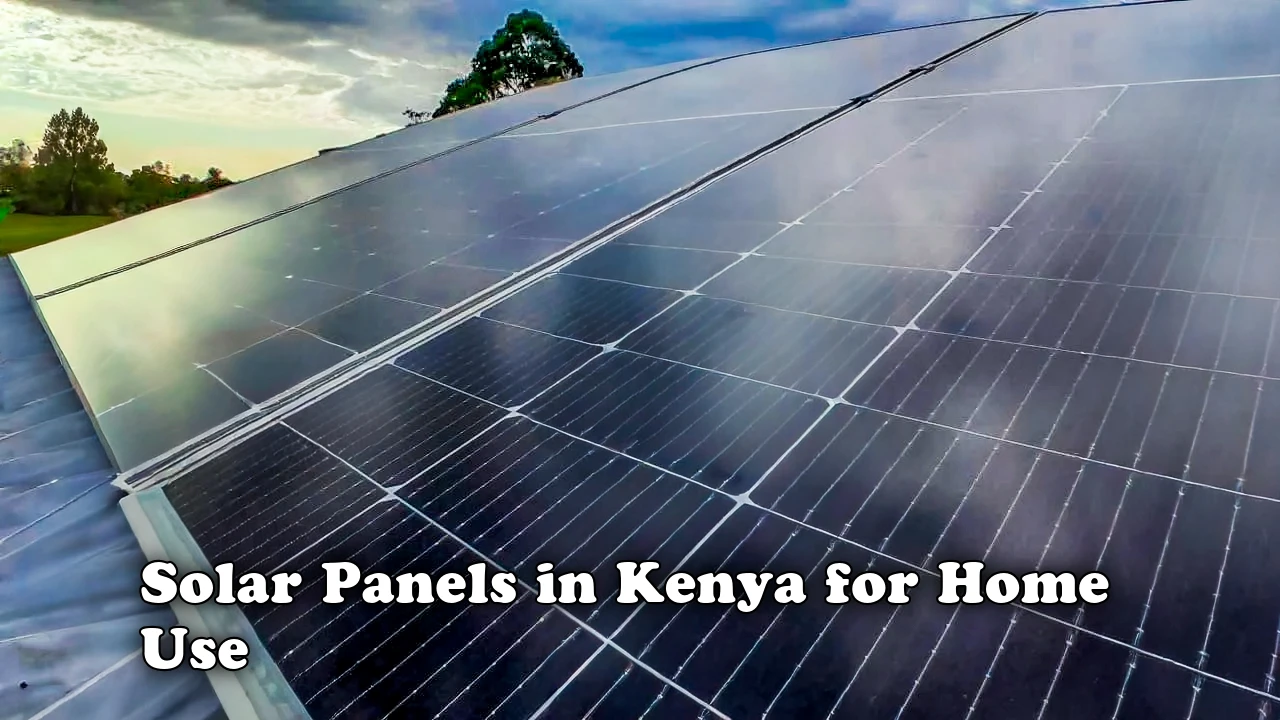
Solar panels in Kenya for home use cost from KES 2,500 for a 50 W panel to KES 30,000 or more for a 550 W panel, while a complete 5kW home system costs between KES 350,000 and KES 700,000.
Many households are shifting to solar power because grid electricity is unreliable and expensive. In short, solar panels turn sunlight into electricity, which cuts power bills and keeps the lights on during outages. Hence, this guide explains what panels and full systems cost and how to size a system for your house.
In addition, we supply and install complete solar power systems for homes, from the panels to the wiring. To get started, call +254790719020 or email info@aquahubkenya.co.ke with details of your home and appliances, and our team will recommend a system size.
Quick Takeaways on Solar Panels in Kenya for Home Use
The main points of this guide are:
- Solar panels cost from KES 2,500 for a 50 W panel to KES 30,000 or more for a 550 W panel.
- Additionally, a 5kW system suits a medium-sized home and costs between KES 350,000 and KES 700,000.
- Moreover, a complete system includes panels, an inverter, batteries, mounting structures and wiring.
- Also, most systems pay for themselves within 2 to 3 years.
- Likewise, panels typically last 20 to 25 years with minimal maintenance.
- Hence, proper sizing matters, because it decides both the efficiency and the cost of your system.
Cost of Solar Panels in Kenya for Home Use
Panel prices depend on the wattage of each panel. For example, solar panels cost from KES 2,500 for 50 W panels to KES 30,000 or more for large 550 W panels. Meanwhile, the cost of a full home system depends on its capacity, and the table below shows what each size suits and what it saves:
| System size | Best for | Monthly savings | Price range |
|---|---|---|---|
| 1 to 2 kW | Small apartments | KES 5,000 to KES 10,000 | KES 110,000 to KES 230,000 |
| 3 to 5 kW | 3-bedroom homes | KES 15,000 to KES 25,000 | KES 350,000 to KES 700,000 |
| Above 5 kW up to 10 kW | Large homes and offices | KES 25,000 to KES 50,000 | KES 700,000 to KES 1,200,000 |
| Above 10 kW | Commercial properties | KES 50,000 or more | KES 1,200,000 or more |
Overall, home solar systems range from KES 100,000 to KES 1,500,000 depending on capacity. However, prices change with the brand and the accessories you choose. Therefore, call +254790719020 or email info@aquahubkenya.co.ke for the exact cost of your system.
What Affects the Cost of Solar Panels
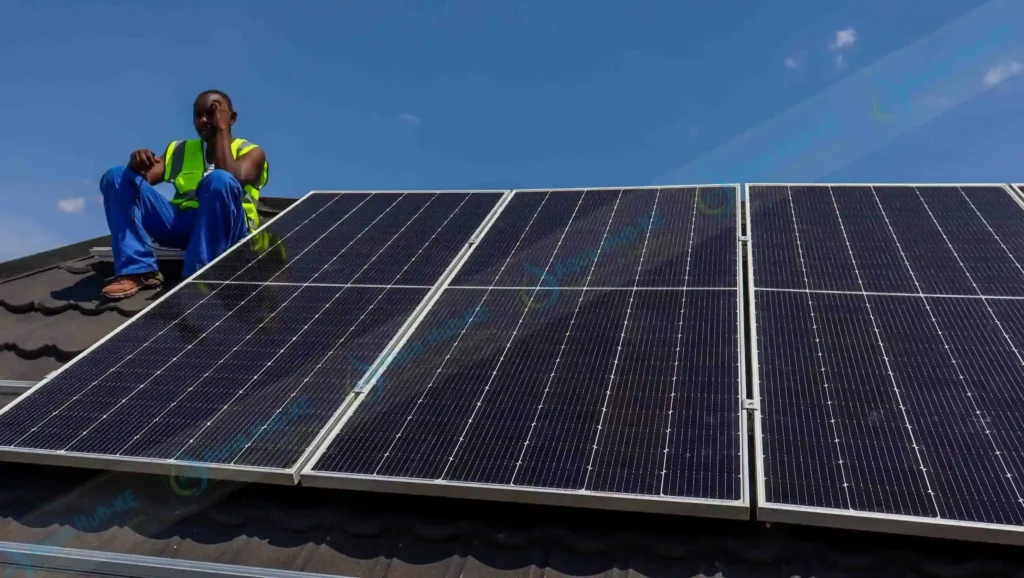
Four factors affect the price you pay. First, monocrystalline panels cost more than polycrystalline ones. Second, the cost rises with the wattage of the panel. Third, prices differ from one brand to another. Finally, the accessories you choose add to the total cost of the system.
How Solar Panels Work in a Home System
From Sunlight to Electricity
To begin with, solar panels turn sunlight into electricity through photovoltaic cells made from semiconducting materials such as silicon. Then, when sunlight strikes these cells, it dislodges electrons, which creates a flow of direct current (DC) electricity. Next, the DC power flows to the inverter, which changes it into alternating current (AC) for household appliances. Additionally, excess energy goes into the backup batteries. As a result, the panels power the house and charge the batteries during the day, and the batteries supply backup power at night.
Why Kenya Suits Solar Power
In fact, solar panels in Kenya for home use benefit from 4 to 6 peak sunlight hours a day, depending on location. Therefore, a well-sized system captures enough sunlight to run lights and household devices. Moreover, solar power is more economical than grid power because it relies on free sunlight.
Components of a Home Solar Power System
A complete home system includes:
- Solar panels, which are the photovoltaic modules that capture sunlight and convert it to electric current
- A 2 to 10 kVA hybrid inverter, which converts DC current to AC current and has a built-in MPPT controller for efficient power control
- Lithium backup batteries, which store excess energy for use at night or when sunlight is low
- Clamps and screws for mounting the panels on the roof
- Cables and connectors that carry power from the panels to the inverter
- Circuit breakers for short circuit protection
Why Use a Hybrid Solar Inverter
Notably, a hybrid inverter has an LCD display and a smart built-in MPPT charger that switches between grid and solar power for the best battery performance. In addition, some models have Wi-Fi for real-time monitoring on mobile devices. For example, some hybrid inverters reach up to 97% efficiency and support lithium or lead-acid batteries.
Types of Solar Panels in Kenya
Indeed, choosing the right panel matters for both efficiency and cost. Besides, thin-film panels are lightweight but less common in Kenya, so most homes choose between the two types below.
Monocrystalline Panels
Monocrystalline panels have high efficiency, which suits homes with limited roof space. However, they cost more than other types.
Polycrystalline Panels
On the other hand, polycrystalline panels are more affordable. Still, their efficiency is slightly lower.
The 5kW Solar Power System for Home
In practice, a 5kW solar power system suits a medium-sized home with a daily energy need of 16 to 20 kWh. Furthermore, a system of this size needs about 9 to 10 panels rated between 500 W and 550 W. Moreover, when it is properly sized and paired with high-performance lithium backup batteries, it provides dependable power day and night.
What a 5kW Solar System Can Power
A well-sized 5kW system can run:
- Up to 25 LED lights
- Televisions
- A washing machine
- A microwave
- Water pumps
- Wi-Fi routers
- CCTV cameras
Designing and Sizing a Solar Power System for Home
Designing a solar system requires careful planning to ensure maximum efficiency. Additionally, proper design helps the panels generate maximum electricity while reducing energy losses.
The design process involves:
- Energy consumption calculation, which assesses your power needs according to your appliances
- Roof orientation and sunlight exposure, because sunlight varies with region and your roof must suit your location
- PV module sizing, which calculates the capacity and number of panels needed
- Battery sizing, which selects batteries that supply power when solar output is low
- Inverter sizing, which matches the inverter to your solar power requirements
Sizing the Solar Panels
Sizing determines both the efficiency and the cost of the system, so work through these steps:
- First, add up the power ratings of your appliances and the hours you use them to find your daily energy need in watt-hours.
- Next, multiply that figure by 1.3 to allow for power losses.
- Then divide the result by the peak sunlight hours, which range from 4 to 6 in Kenya depending on your location.
- Finally, divide the wattage you need by the rating of one panel to find the number of panels.
For example, a home that uses 20 kWh per day needs 20,000 Wh × 1.3, which gives 26,000 Wh. Then, dividing by 5 peak sunlight hours gives 5,200 W, and dividing by 550 W panels gives about 9.5, so the home needs 10 panels.
Sizing the Inverter
The input capacity of the inverter should not be lower than the total load required, especially for stand-alone appliances. In addition, it should have 25% to 30% more capacity than the total power load, and its nominal voltage must match your battery. Likewise, for grid-integrated systems, the input rating of the inverter should equal the rating of the PV array, which allows safe and efficient operation.
How to Install Solar Panels at Home
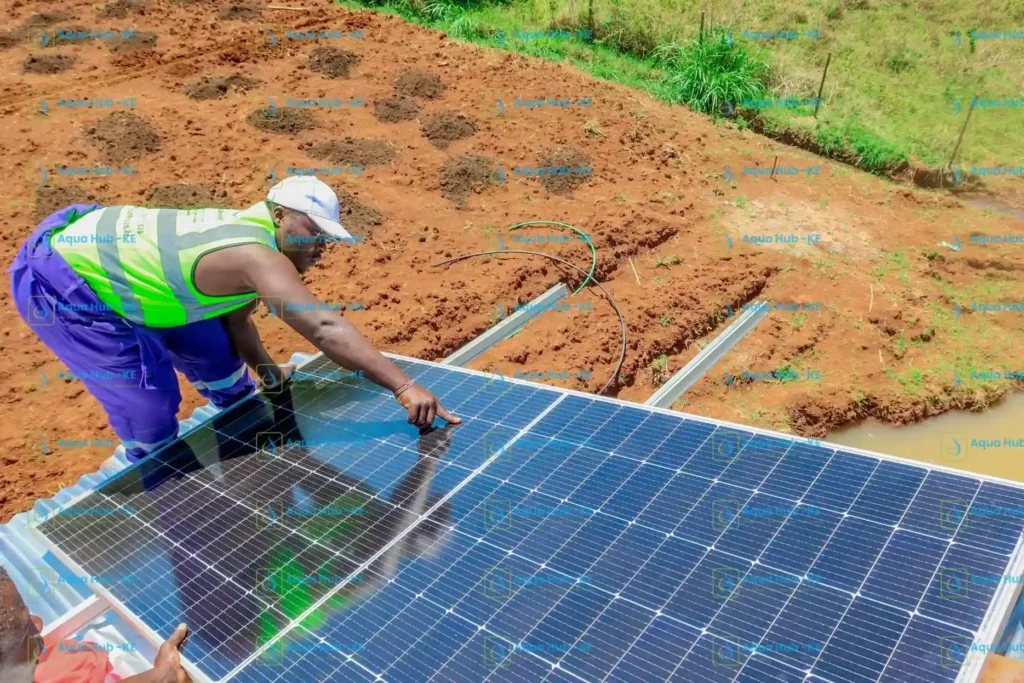
Indeed, installation quality determines the lifespan of the system. Hence, the work starts with planning before any panel goes on the roof.
Planning and Site Assessment
Roof Inspection
A site assessment evaluates the roof and its exposure to sunlight. Therefore, the technicians inspect the roof structure before they mount anything.
Direction of the Panels
Also, Kenya lies across the equator, so panels should face toward it. This means panels face north on sites south of the equator and south on sites north of it. Our technicians confirm the best direction and tilt for your site.
Installation Stages
Once the assessment is complete, the work follows these stages:
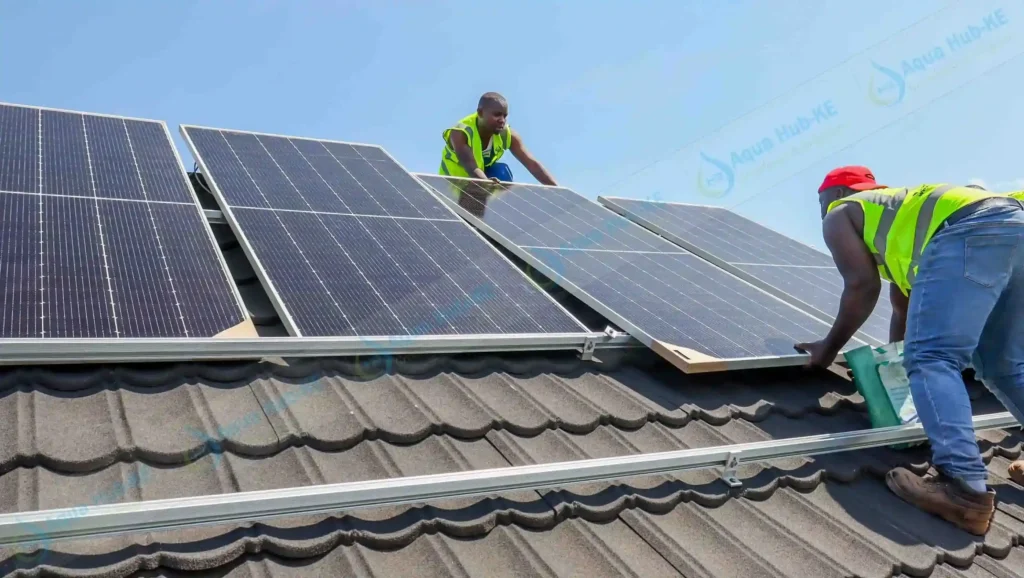
- To begin with, our technicians mount the support structures for the panels.
- Next, they install the solar panels on the supports.
- Afterwards, they connect the inverter and the batteries.
- Subsequently, they wire the safety components, including the circuit breakers.
- Finally, they test the system and commission it.
To book installation, call +254790719020 or email info@aquahubkenya.co.ke with your location and roof details. Alternatively, read more about domestic solar panel installation before you decide.
Solar Panels for Water Pumping
Furthermore, solar panels power water pumps. Submersible pumps for boreholes sit inside the borehole and suit deep water from 30 m to 300 m below the ground, while solar-powered surface pumps suit shallow sources such as rivers. Additionally, solar booster pumps raise the pressure for irrigation and water supply systems.
Also, home owners who need water can read about solar pumps for home water access. Meanwhile, farms can compare solar and electric pumps before choosing. Likewise, farmers who want to irrigate with the sun can read about solar irrigation systems and solar irrigation kits.
Benefits of Solar Panels in Kenya for Home Use
Solar panels in Kenya for home use lower electricity bills, because solar power relies on free sunlight and reduces reliance on the grid. Moreover, solar power gives energy independence, since you control your energy use and avoid the problems of grid rationing. Systems with batteries also supply electricity during outages. Additionally, solar energy produces zero carbon emissions and reduces fossil fuel use. Furthermore, panels last 20 to 25 years with minimal maintenance. Lastly, the system can connect to the grid supply and serve as an alternative during an outage.
Return on Investment in a Solar System
In general, a solar system takes 2 to 3 years to break even after the initial spending. Even so, you save a lot of money in the long run, although the installation cost is high. For example, a 5kW system for a 3-bedroom home at KES 480,000 saves KES 20,000 to KES 22,500 per month, which comes to KES 240,000 to KES 270,000 per year. As a result, the payback period is between 1.8 and 2 years.
Maintenance of Solar Power Systems
Recommended maintenance is simple. First, clean the solar panels to remove dust. Next, check the wire connections. Then monitor the battery performance. Finally, inspect the inverter for alerts or system faults.
Other Solar Products for Homes and Farms
Besides electricity, the sun can also heat water and dry produce. For example, home owners who want hot water can read about solar water heater installation in Kenya. Meanwhile, farmers who want to dry produce can read about solar dryers in Kenya and solar dryers for chilli and spices.
Where to Buy Solar Panels in Kenya
We stock quality monocrystalline solar panels in Kenya for home use in different power ratings to match your energy needs. In addition, we install solar borehole pumps and solar booster pumps.
For advice before you buy, call +254790719020 and our team will recommend panels for your home.
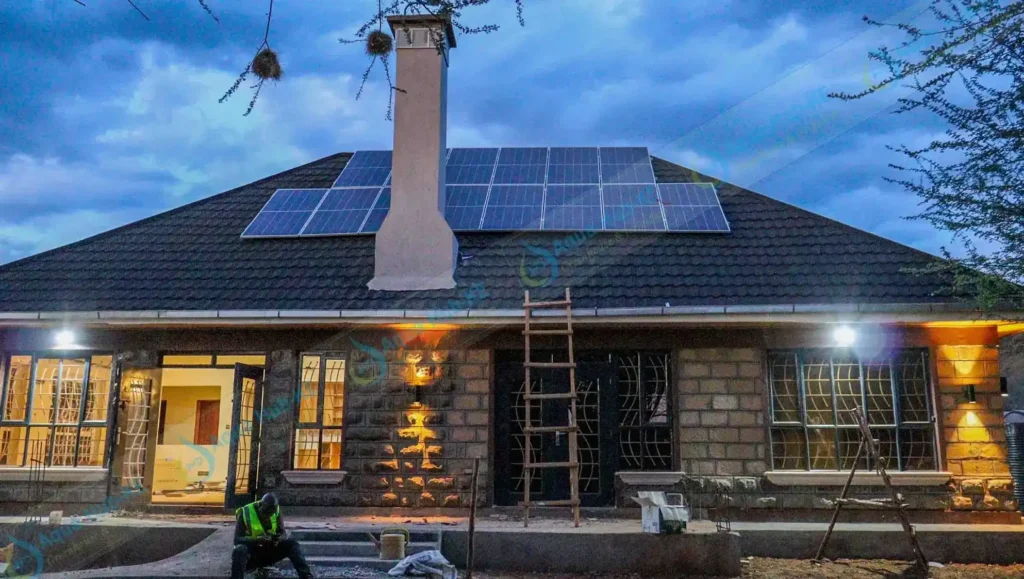
Frequently Asked Questions
How much do solar panels cost in Kenya?
Solar panels cost from KES 2,500 for a 50 W panel to KES 30,000 or more for a 550 W panel.
How much does a solar system cost for a home in Kenya?
A solar system for a home in Kenya costs from KES 100,000 to KES 1,500,000, depending on its size. Therefore, call +254790719020 or email info@aquahubkenya.co.ke for the exact cost of your system.
How much does a 5kW solar power system cost in Kenya?
A 5kW solar power system costs between KES 350,000 and KES 700,000 on average. However, the final cost depends on the complexity of the system.
How many solar panels are needed for a 5kW system?
A 5kW system needs about 9 to 10 solar panels rated between 500 W and 550 W each. For example, 10 panels of 550 W give 5.5 kW. As a result, the exact number depends on the rating of the panel you choose.
What size solar power system do I need for my home?
The size of the solar power system you need for your home depends on your daily power use. For example, homes using around 20 kWh per day usually need a 5kW system, while small apartments usually need a 1 to 2 kW system.
Do I need batteries for my solar power system?
You do not need batteries for your solar power system, but they provide reliable backup when sunlight is unavailable.
How long do solar panels last?
Solar panels last 20 to 25 years with minimal maintenance.
Does rain affect solar panels?
Rain does not affect solar panels, because they are designed to withstand rain and other outdoor exposure.
Do solar panels require maintenance?
Solar panels require minimal maintenance. Overall, cleaning the panels and occasional inspections are usually sufficient. For example, cleaning removes the dust that builds up on the surface.
Where can I buy solar panels in Kenya?
You can buy solar panels in Kenya from us. Then call +254790719020 or email info@aquahubkenya.co.ke to discuss your home and the panels you need.
Final Thoughts on Solar Panels in Kenya for Home Use
In short, solar power gives a home lower power bills and backup during outages. Therefore, choosing the right panels and sizing the system to your daily energy use give you reliable power for many years. With regular cleaning and checks, the system keeps working with minimal upkeep.
Overall, solar panels in Kenya for home use start at KES 2,500 per panel, and a complete 5kW home system costs between KES 350,000 and KES 700,000. Call +254790719020 or email info@aquahubkenya.co.ke to get the exact cost for your home.