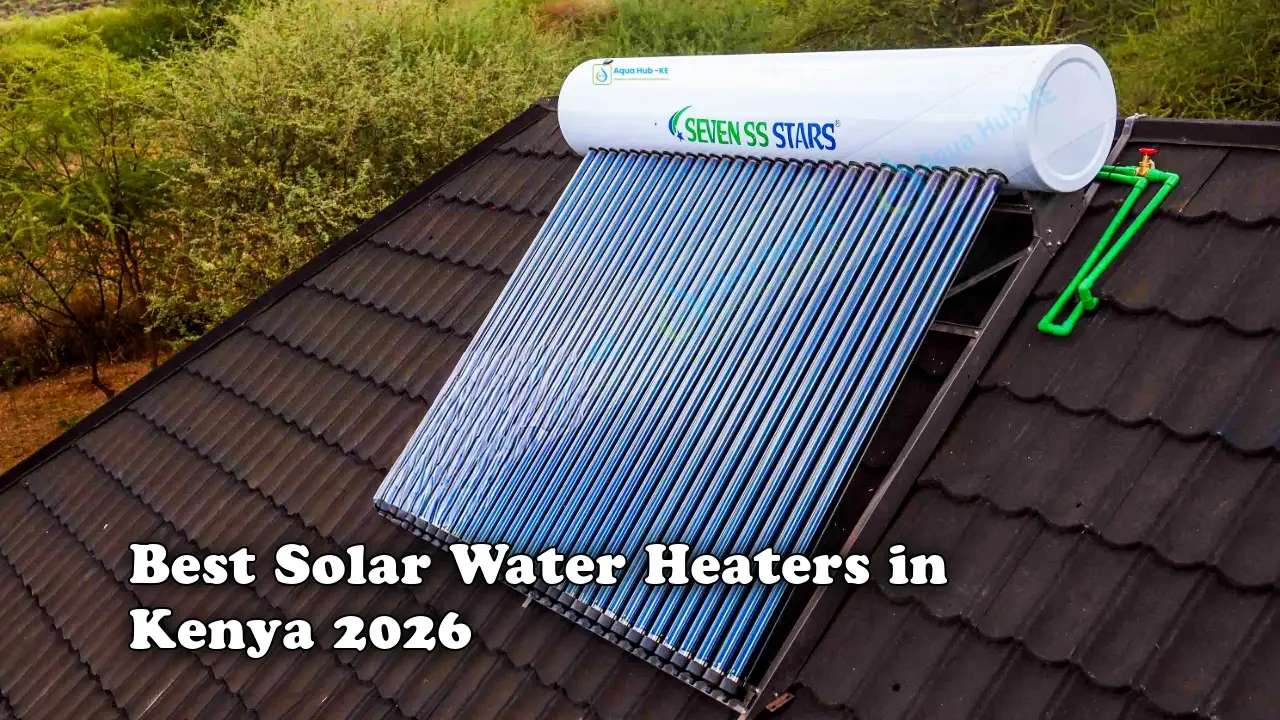
Solar water heater installation in Kenya costs from KES 155,000 for a 150-litre system at Aqua Hub Kenya.
Hot water is a daily need in homes, hotels, guest houses and schools, and heating it with electricity adds a large amount to the monthly power bill. A solar water heater uses heat from the sun to warm water on your roof instead. As a result, you rely far less on the electric element or a gas heater for showers, cleaning and cooking.
Aqua Hub Kenya supplies solar water heating systems in a range of sizes for homes and businesses. Our technicians survey your roof, fit the system and test it before handing it over. To book a site visit or ask for a quote, call +254790719020 today.
Cost of Solar Water Heater Installation in Kenya from Aqua Hub Kenya
The price of a system depends mainly on the size of the hot water cylinder. Additionally, the collector type, the brand and the layout of your roof affect the final figure.
| System size | Suitable for | Cost (KES) |
|---|---|---|
| 150 litres | Couple or small home | 155,000 |
| 300 litres | Large family or small guest house | 270,000 |
These figures cover the system itself. Because every roof and plumbing layout is different, the cost of delivery and fitting can change from one home to the next. For the exact price of your order, speak to our team through +254790719020 or email info@aquahubkenya.co.ke.
How Solar Water Heaters Work
A solar water heater collects heat from sunlight and passes it to water. The heated water then moves into an insulated cylinder, where it stays warm until you open a hot tap. Because the system uses sunlight, it keeps working every sunny day without adding to your power bill.
Main Parts of a Solar Water Heater
Every system has a few working parts, and knowing them helps you understand the quote you receive. A standard set-up includes the following:
- Solar collector, which is either a flat plate panel or a row of glass vacuum tubes that absorb heat.
- Insulated hot water cylinder, which holds the heated water and keeps it warm overnight.
- Pipes and fittings, which carry cold water in and hot water out to the house.
- Backup electric element, which heats the water on long cloudy spells.
Flat plate collectors suit areas with good, steady sunshine. Meanwhile, vacuum tube collectors hold heat well in cooler, higher areas such as parts of Nyandarua and Nyeri.
Sizing the Cylinder for Your Household
A simple rule is to allow about 50 litres of hot water per person each day. Therefore, a couple needs about 100 litres, while a family of four needs about 200 litres. Hotels, schools and large households usually need 300 litres or more. Once you know how many people use hot water daily, our team can match you with the right size.
Solar Water Heater Installation in Kenya Compared with Solar Electricity
Many home owners mix up solar water heating and solar electric panels. A solar water heater turns sunlight into heat and stores it in water. In contrast, solar panels turn sunlight into electricity, which then runs lights, TVs and other appliances.
When your main goal is hot water, a solar water heater does the job directly and uses less roof space for the same result. However, when you also want power for lighting and appliances, you need a separate panel system. You can read more about sizing a power system in our guide to solar panels for home use. Some homes install both, with each system handling its own task.
How to Choose a System for Solar Water Heater Installation in Kenya
Picking the right heater before you buy saves you from costly changes later. Look at these points before you place an order:
- Capacity, matched to the number of people who use hot water each day.
- Roof direction and strength, since the collector needs full sun and a firm base.
- Water quality, because hard borehole water leaves scale inside the collector and cylinder.
- Backup heating, so you still have hot water on rainy days.
- Warranty on the collector and cylinder.
- After-sales support from a supplier you can reach easily.
If your home draws water from a borehole, check the pump pressure as well. Our guide to submersible pumps for boreholes explains how pump choice affects water supply to the house.
Solar Water Heater Installation in Kenya Steps by Aqua Hub Kenya
Our technicians follow a clear order of work on every site. Each stage below takes place at your home or building:
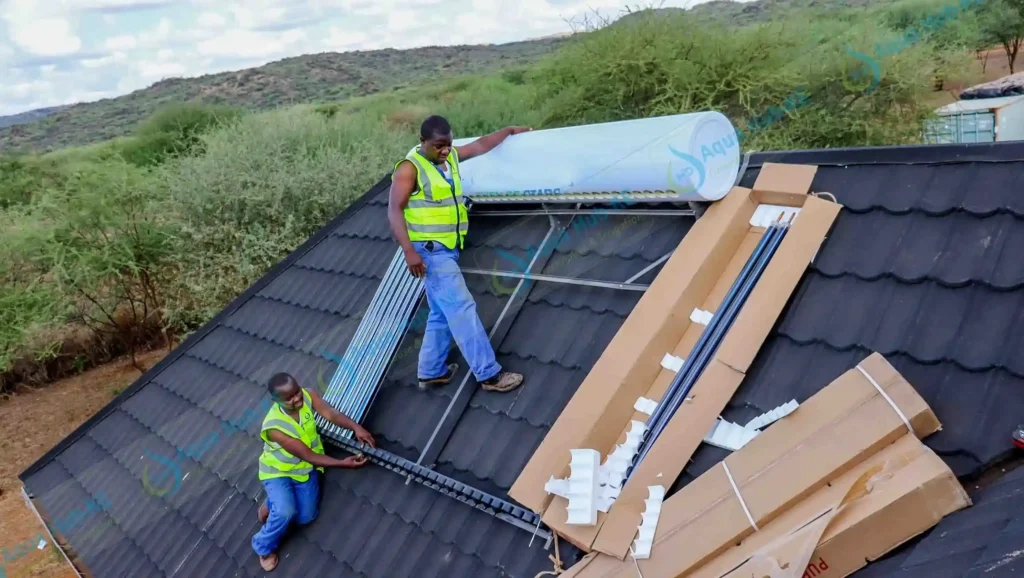
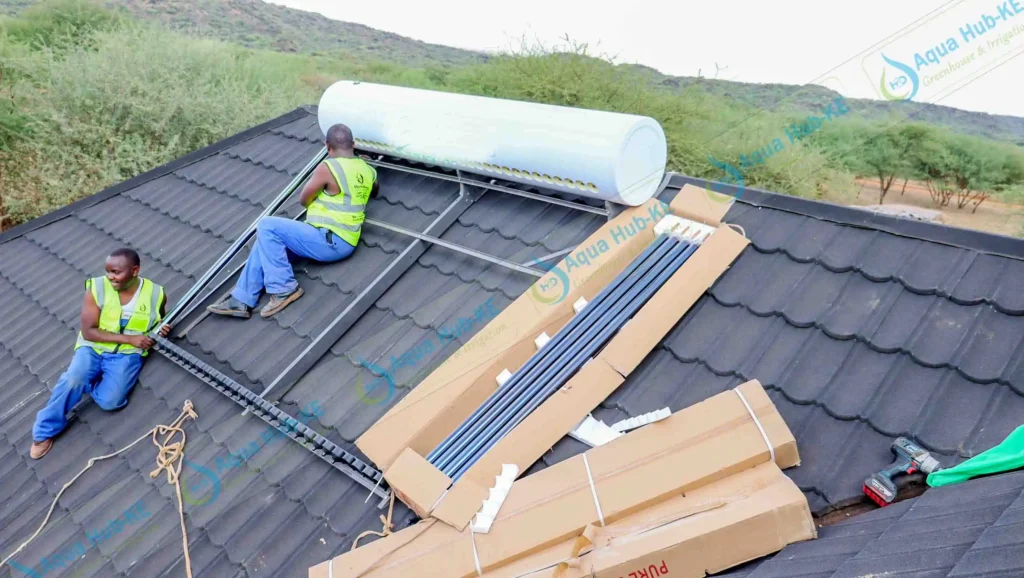
- To begin with, our technicians survey the roof, check its strength and note where the sun falls through the day.
- Next, they fix the mounting frame firmly to the roof structure.
- Afterwards, they place the collector on the frame, facing the direction that gets the most sun.
- Once the collector is secure, they set the hot water cylinder in position and level it.
- Subsequently, the team connects the cold water supply and the hot water lines to your plumbing.
- With the plumbing done, they fit the pressure relief valve and other safety valves.
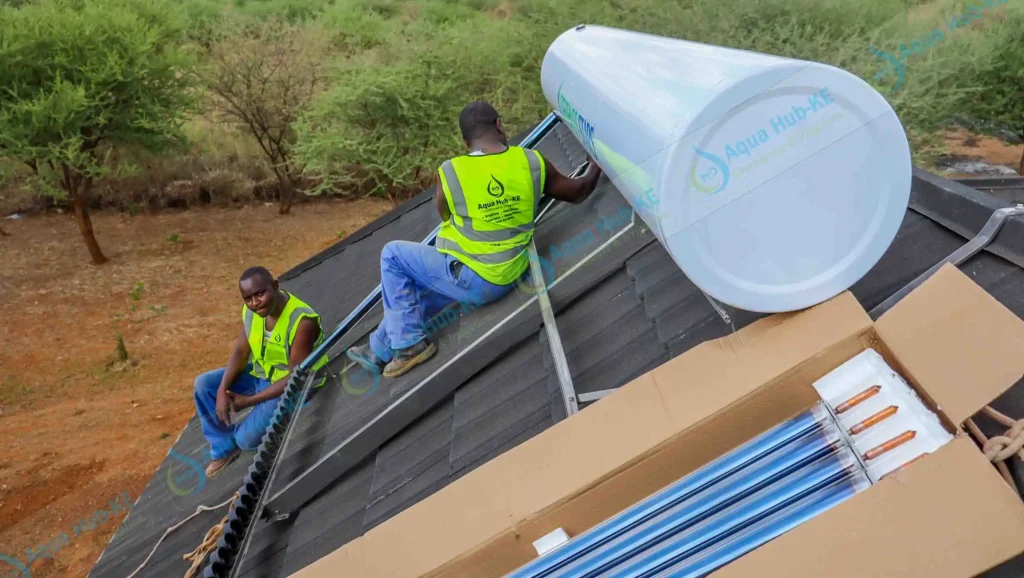
- They then fill the system, check every joint for leaks and confirm the water heats up.
- Finally, our technicians walk you through the controls and the backup switch before handing the system over.
Most home installations take one day, depending on the roof and the plumbing. To book a survey for your home, call +254790719020.
Maintenance Routine for Solar Water Heaters
A solar water heater runs with little attention, but simple checks keep it working well for many years. Follow this routine:
- Clean the collector surface every few months to remove dust and leaves.
- Lift the pressure relief valve lever now and then to make sure it opens freely.
- Flush the cylinder once a year to remove scale, especially if you use borehole water.
- Inspect the pipe insulation on the roof and replace any cracked sections.
- Service or replace the backup element when the water takes longer to heat on cloudy days.
Additionally, trim any tree branches that start to shade the collector. Shade cuts the amount of heat the system collects, which means you use the backup element more often.
Benefits of Solar Water Heater Installation in Kenya
Kenya receives strong sunshine for most of the year, which makes solar heating a practical choice for many homes. The main benefits include the following:
- Lower electricity bills, because the sun does most of the heating work.
- Free energy from sunlight every day the sky is clear.
- Long service life when you maintain the system well.
- Hot water during power outages, since the cylinder stores heat.
- Less reliance on gas cylinders or charcoal for heating water.
- A cleaner source of energy for your home or business.
For schools, hotels and hospitals, these savings add up quickly because they use large amounts of hot water every day. Moreover, farms that use solar energy for drying produce can apply the same approach, as our solar dryers show.
Why Choose Aqua Hub Kenya for Solar Water Heaters?
Aqua Hub Kenya offers solar water heaters in clear sizes, so you can match the system to your household without guesswork. We explain the difference between collector types and help you pick one that suits your area and water source.
Before you order, our team measures your roof and asks about your daily hot water use. Hence, you receive a system sized for your needs rather than one that is too small or larger than you require. Our technicians then fit and test the system on site, and we remain available for support after installation. To discuss your home or building with our team, call +254790719020.
Frequently Asked Questions
How much space does a solar water heater need?
A solar water heater needs about 3 to 5 square metres of unshaded roof or terrace for a typical 200-litre system. Larger systems require more space.
Which type of solar water heater should I choose?
The type of solar water heater you should choose depends on your area and water source. Flat plate collectors suit warm areas with steady sun, while vacuum tube collectors hold heat better in cooler areas.
What size of solar water heater does a family of four need?
A family of four needs a solar water heater of about 200 litres, based on 50 litres per person each day.
Does a solar water heater work on cloudy days?
A solar water heater still works on cloudy days, although it heats water more slowly. During long cloudy spells, the backup electric element keeps the water warm.
Can my roof carry a solar water heater?
Your roof can carry a solar water heater if the structure is strong enough to hold the weight of a full cylinder. Our technicians inspect the roof during the site survey before any fitting begins.
How long does solar water heater installation take?
Solar water heater installation usually takes one day for a home. Larger buildings with long pipe runs may take longer.
How much does solar water heater installation in Kenya cost?
Solar water heater installation in Kenya costs from KES 155,000 for a 150-litre system and KES 270,000 for a 300-litre system. For the exact price of your order, call +254790719020.
Can I use borehole water in a solar water heater?
You can use borehole water in a solar water heater, but hard water leaves scale inside the system over time. Flushing the cylinder once a year helps keep it working well.
Final Thoughts on Solar Water Heater Installation in Kenya from Aqua Hub Kenya
A solar water heater lets your home or business use sunlight to heat water instead of electricity. Choosing the right cylinder size, collector type and roof position makes a clear difference to how well the system performs. With regular cleaning and yearly flushing, the system serves you for many years.
Solar water heater installation in Kenya costs KES 155,000 for a 150-litre system and KES 270,000 for a 300-litre system at Aqua Hub Kenya. To arrange a roof survey and get the exact price for your home, call +254790719020 or email info@aquahubkenya.co.ke, or visit our contact page for our Nairobi and Eldoret offices.